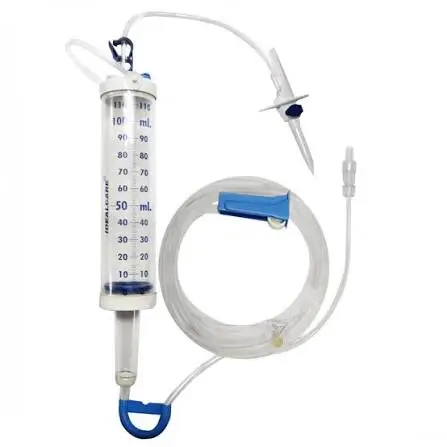
Examining the drip chamber not in isolation but as one component within the broader IV administration set reveals important considerations around how this component’s design and positioning affects overall system function and clinical usability.
The Drip Chamber’s Position Within the Overall Set Sequence
Within a standard drip chamber iv set the chamber is positioned immediately below the spike that connects to the fluid bag, placing it at a point where clinical staff can conveniently observe flow immediately as fluid begins moving through the system, before the fluid continues through the roller clamp and any injection ports toward the patient connection point.
Coordinating Chamber Design With Roller Clamp Function
Effective administration set design requires the drip chamber and roller clamp to work together coherently, with chamber positioning allowing clinical staff to conveniently observe flow rate changes immediately as they make roller clamp adjustments, supporting efficient, accurate flow rate titration during clinical use.
Manufacturing Consistency Across the Complete Assembly
Since the drip chamber represents one component within a larger manufactured assembly, achieving reliable overall administration set performance requires manufacturing consistency not just within the chamber itself but across its integration with adjacent tubing, spike connection, and other components, ensuring the complete set functions reliably as an integrated system.
Variation in Chamber Design Across Different Set Categories
Different administration set product lines, including standard sets, pediatric-specific sets, and specialized sets for particular clinical applications like blood administration, often incorporate drip chamber variations suited to their specific intended use, making it important for procurement teams to understand these variations when selecting appropriate products for different clinical applications.
Blood Administration Set Chamber Considerations
Administration sets specifically designed for blood product delivery often incorporate drip chambers with particular design features, including appropriate filtration elements suited to blood product characteristics, representing an important specialized variation within the broader drip chamber category relevant to transfusion medicine practice.
Quality Validation for Complete Set Integration
Manufacturers need comprehensive quality validation confirming that drip chamber performance remains reliable when integrated within the complete administration set assembly, rather than validating chamber function only in isolation without confirming how it performs as part of the complete clinical product.
Procurement Considerations for Set Selection
Healthcare facility procurement teams should evaluate drip chamber design and specifications as part of their broader IV administration set selection process, recognizing how this component’s integration within the complete set affects overall clinical usability and appropriate application matching.
Conclusion
Understanding how the drip chamber integrates within the complete IV administration set, including its coordination with roller clamp function and variation across different specialized set categories, supports both more informed product evaluation and effective clinical practice. This integrated perspective provides valuable context beyond considering the chamber as an isolated component.
FAQs
Q1: Where is the drip chamber typically positioned within a standard IV administration set? Immediately below the spike connecting to the fluid bag, allowing clinical staff to observe flow immediately as fluid begins moving through the system.
Q2: How does chamber design vary across different administration set categories? Specialized sets, such as those designed for blood product administration, often incorporate drip chamber variations with specific features like appropriate filtration elements suited to their particular application.
Q3: Why should quality validation assess the complete integrated set rather than the chamber alone? Reliable overall performance requires validating how the chamber functions together with adjacent components, not just confirming chamber function in isolation.
