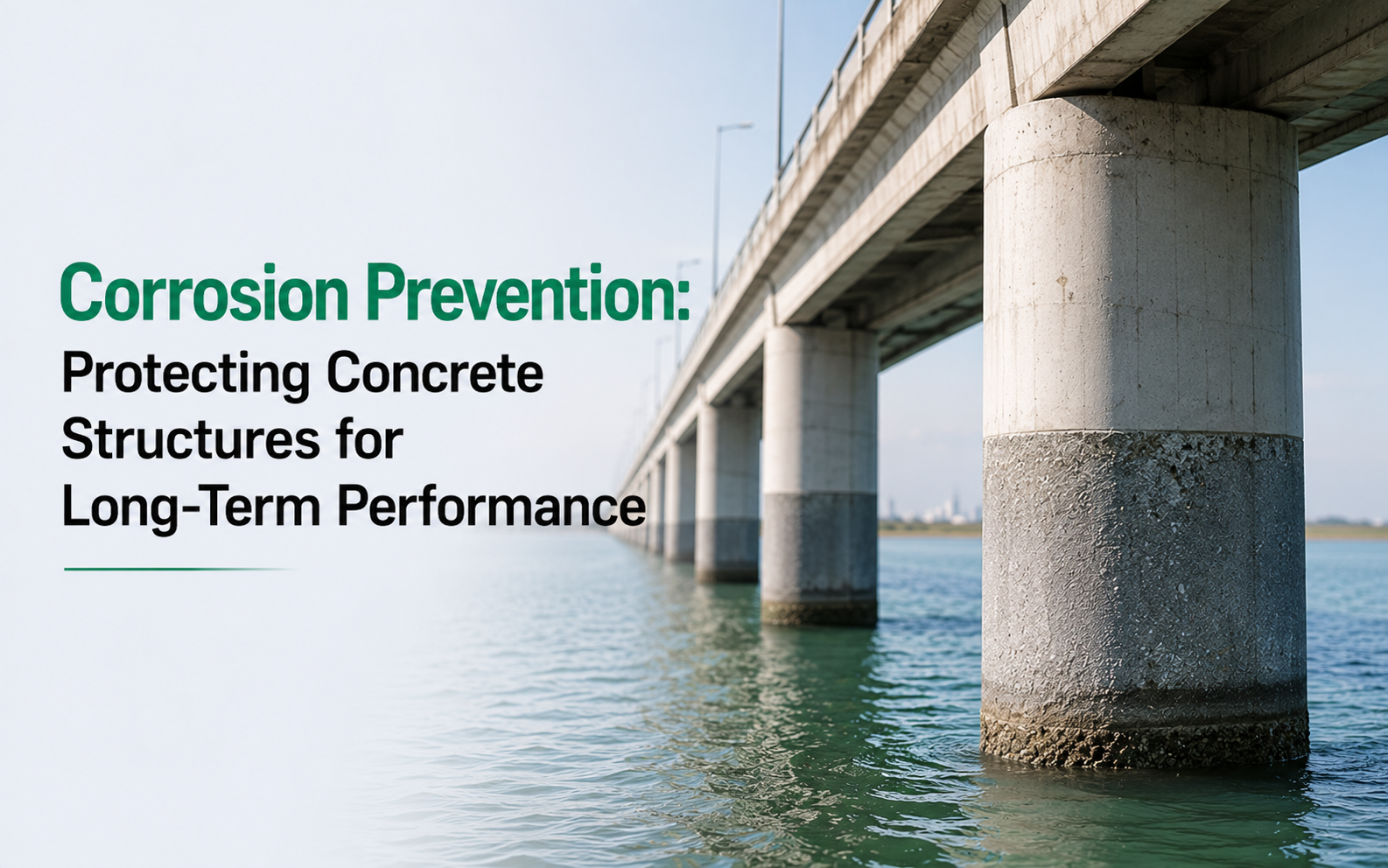
Concrete structures are built for the long haul, but their lifespan is directly linked to protecting the steel rebar that supports them. Even moisture, oxygen, salts, and chemicals can make the steel rust and will cause corrosion that weakens the concrete from your inside. This is the reason why beams to avoid corrosion should always be a consideration from the earliest design and constructing stages of your project.
By cutting repair costs, improving safety, and prolonging the use of buildings, bridges, and other instalments a well-working protection plan reduces damage.
What Causes Corrosion?
In concrete corrosion begins when water and other contaminants reach the reinforcing steel. The steel rusts and expands. This expansion creates pressure on the adjacent concrete and results in further steel being exposed to corrosion mode of attack.
Common causes include:
- Water penetration
- De-icing salts
- Coastal environments
- Poor-quality concrete
- Inadequate protective coatings
Understanding these risks is the first step towards reducing corrosion.
Intelligent Approaches for Defense of RC
Building components with resistant materials and using correct construction ways is what it takes to fight corrosion successfully. Good low-permeability concrete prevents moisture movement and corrosion-resistant reinforcement provides a second layer of protection.
Engineers should also provide sufficient concrete cover above reinforcing steel, when required, and proper drainage for surface/ground water surrounding the structure. These uncomplicated design selections minimize damage from dangers relying on the long-term factor of exposure.
Choosing the Right Prevention Methods
As it is not feasible that one protection system would do the job for every project because every environment has different climatic conditions. The selection of materials should come across humidity, exposure to chemicals, and load-induced traffic.
Before selecting reinforcement systems, coatings, and maintenance strategies, construction professionals often research the best strategies for corrosion prevention. Planning properly would increase structural credibility and reduce repair cost.
Maintenance Makes a Difference
Even the strongest building needs to be inspected regularly. If they remain untreated, small crack or damage to the protective layers which could allow moisture to reach the reinforcement.
This plan of basic maintenance should include:
- Inspecting concrete surfaces regularly
- Repairing cracks promptly
- Cleaning drainage systems
- Reapplying protective sealers when needed
Long-term, when properly maintained it offers protection from corrosion and aids in maintaining the integrity of the structure.
See also: Top 10 Business Uses for UV DTF Stickers
Long-Term Benefits of Corrosion Protection
Corrosion prevention includes structural safety, not limited to that. Maximally minimizes the maintenance, reduces infrastructure breakdowns, and elevates project value.
This means fewer repairs for owners and the confidence that engineers and builders will know that their structure will continue to perform as designed for many years into the future. Prevention is usually a lot cheaper than beautiful restoration work.
Final Thoughts
Corrosion prevention is one of the main factors that result in durable concrete structures. Wasteful and expensive damage can easily be avoided if we apply sensible construction, choose quality materials, and keep the structures for a long time to protect the reinforcement from rust.
Owners and builders who understand best practices in corrosion protection will find having information to make such decisions invaluable for the sake of safety, longevity and performance over the project life. But doing the right things today will prolong the lifespan of critical infrastructure for years.
