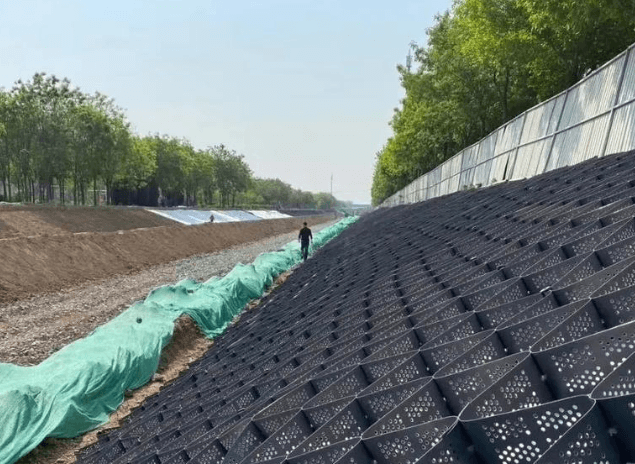
Achieving the erosion control or stabilization benefits geocell systems promise depends heavily on proper geocell installation technique, making familiarity with fundamental installation principles genuinely important for both contractors and property owners undertaking these projects.
Starting With Adequate Site Preparation
Before any geocell material is placed, proper site preparation, including appropriate grading and removal of debris or vegetation that could interfere with proper cell placement, establishes the foundation for successful installation and long-term system performance.
Anchoring the System Appropriately
Proper anchoring, whether through stakes, pins, or other securing methods appropriate to your specific site conditions, prevents the geocell structure from shifting under gravitational forces or water flow before fill material and any intended vegetation have fully stabilized the system.
Expanding and Positioning Cells Correctly
Geocell material typically ships in a compressed, accordion-like format requiring proper expansion before installation, and ensuring this expansion happens correctly, with cells achieving their full intended dimensions, matters considerably for the system ultimately performing as designed.
Selecting and Placing Fill Material
Once cells are properly positioned and anchored, filling with appropriate material, whether soil for vegetation, gravel for drainage-focused applications, or other suitable fill, needs to happen thoroughly, ensuring each cell receives adequate fill without leaving gaps that could compromise structural integrity.
Managing Transitions and Edges
Particular attention to how the installed geocell system transitions to surrounding, unprotected areas helps prevent erosion from simply migrating around the edges of an otherwise well-installed system, undermining the overall protection the installation was intended to provide.
Contractors and property owners seeking detailed installation guidance can find comprehensive information through this resource on geocell installation fundamentals and best practices.
Quality Verification During Installation
Periodically checking installation quality throughout the process, rather than only at the end, helps catch and correct issues like inadequate anchoring or incomplete fill before they become embedded within a completed system that would be far more difficult to address afterward.
Post-Installation Monitoring Considerations
Once installation is complete, particularly for systems incorporating vegetation, ongoing monitoring during the establishment period helps identify any areas needing additional attention before minor issues develop into more significant performance problems.
Final Thoughts
Proper geocell installation, from thorough site preparation through careful attention to anchoring, fill placement, and edge transitions, directly determines whether these systems actually deliver their intended erosion control or stabilization benefits over the long term.
See also: Why Local Business Directories Matter More Than Ever
Frequently Asked Questions
How critical is proper cell expansion during installation?
Very important, since cells not achieving their full intended dimensions can compromise the structural confinement the entire system depends on for effective performance.
What happens if anchoring is inadequate during installation?
Insufficient anchoring risks the system shifting or sliding before fill material and vegetation fully stabilize, potentially undermining the intended erosion control benefit.
Why do edge transitions matter for overall system performance?
Erosion can simply migrate around unprotected edges if transitions aren’t properly managed, undermining protection even in an otherwise well-installed central system area.
