Every summer, the same conversation happens in a lot of households. Sign up for the city pool program because it’s cheap and close, or pay more for a dedicated swim school with smaller classes and a real curriculum. A lot of families default to the community option first, then switch after a season or two once they notice their kid isn’t actually progressing. If you’re weighing that decision in the West Valley, city of surprise swim lessons options exist alongside city programs, and the differences between them matter more than the price tag suggests.
Community programs aren’t bad. They’re just built for a different purpose. Cities run swim lessons to give as many kids as possible access to basic water safety, which is a good goal, but it’s a very different goal from teaching a child to become a genuinely confident, capable swimmer.
What Community Programs Are Actually Built For
City and community center programs usually run on volunteer or part-time seasonal staff, larger class sizes, and a fixed curriculum that has to work for a huge range of kids at once. That’s not a criticism. It’s just the reality of trying to serve an entire city on a public budget.
The tradeoff is that individual attention gets thin. A class of eight to ten kids with one instructor means a lot of standing around waiting for a turn, and less correction on the small technical details that actually make someone a strong swimmer instead of a kid who can technically stay afloat.
Surprise swim lessons through the city are a fine starting point for basic exposure to water, especially for families who just want their kid comfortable enough to survive a pool party. For anything beyond that, most parents eventually notice the ceiling.
Why Ratio Is the Detail Most Parents Underestimate
Ask any experienced swim instructor what actually determines how fast a kid learns, and almost none of them will say it’s the pool, the curriculum, or even the instructor’s personal skill level. It’s the ratio.
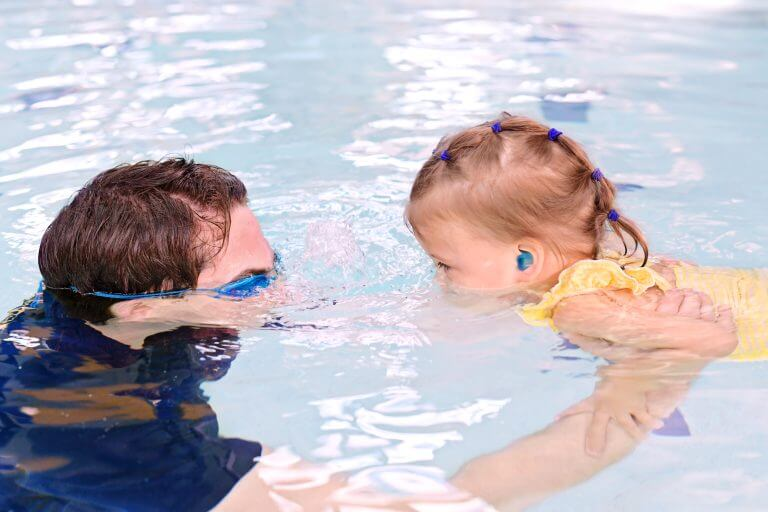
A 3:1 or 4:1 class means an instructor can watch, correct, and adjust every single student multiple times per lesson. An 8:1 or 10:1 class means most kids get a fraction of that attention, and the ones who need the most help often get it least, because louder or more confident kids naturally pull focus.
This is the single biggest reason kids plateau in larger programs. It’s not that the teaching is bad. It’s that there simply isn’t enough time in a 30 or 45 minute lesson to give ten kids the same individual correction four kids would get.
The Curriculum Problem Nobody Talks About
Community programs generally follow standardized national frameworks, which makes sense for consistency across cities and staff turnover. The downside is that standardized curriculums move at a pace built for the average kid in the class, not your specific kid.
A child who’s ready to move faster gets held back by the group. A child who needs more repetition on a skill before moving forward gets pushed ahead anyway because the six-week session is ending and the next unit is starting. Neither situation actually serves the individual kid well.
Some swimming schools solve this by running smaller, skill-based groups instead of strict age or session-based ones, letting kids move at whatever pace actually fits their progress. That flexibility is hard to replicate in a public program serving hundreds of kids across multiple pools with rotating instructors and fixed session start dates.
See also: How Tinted SPF Simplifies Busy Morning Skincare Routines
Staff Consistency Matters More Than People Expect
Community programs often rely on seasonal or part-time staff, sometimes teenagers working their first job during summer break. That’s not automatically a problem, but it does mean less consistency from week to week and less depth of training compared to instructors who do this year-round as their actual profession.
Dedicated swim schools tend to invest heavily in instructor training because retention and reputation depend on it directly. An instructor who’s been teaching the same age group for years develops an eye for tiny issues, like a kid slightly overrotating their head on a breath, that a newer or less experienced instructor might miss entirely.
Kids also respond better to familiar faces. Bouncing between different instructors every few weeks, which happens often in larger seasonal programs, makes it harder for a child to build the trust that actually speeds up learning in the water.
Facility and Water Quality Differences
This one gets overlooked constantly. Public pools serve dozens of programs, from lap swim to aqua fitness to lessons, all sharing the same water and schedule. Dedicated swim schools usually run smaller, purpose built pools specifically for instruction, which means warmer water, tighter sanitation schedules, and an environment actually designed around teaching rather than general recreation.
For younger kids especially, water temperature affects attention span more than most parents realize. A cold pool means a shivering, distracted child who wants out, not one who’s focused on learning a new skill.
Pool depth and layout matter too. A facility built specifically for instruction usually has shallow, controlled areas designed for beginners, rather than a single general pool where lesson groups have to share space with lap swimmers or open recreation time. That separation alone reduces distractions and makes it easier for young kids to focus on the instructor instead of everything else happening in the water around them.
If you’re trying to figure out which approach actually fits your family’s situation, it’s worth taking a minute to contact us and ask specific questions about ratios, instructor experience, and how progress gets tracked. Most of these details aren’t obvious from a website alone, and a short conversation clears things up fast.
When Community Programs Still Make Sense
None of this means city programs are pointless. For families on a tight budget, or kids who just need basic exposure to water without a long-term commitment, community lessons still serve a real purpose. Not every family needs or wants a year-round program with a structured curriculum.
The distinction really comes down to the goal. Basic water familiarity and survival skills for an occasional pool day is one thing. Building an actual confident, technically sound swimmer who can handle real situations in the water is another, and that second goal usually needs the structure, ratio, and consistency that dedicated programs are built around.
What Actually Drives the Decision
Most families don’t switch from community programs to dedicated swim schools because of marketing. They switch because they watched their kid stall out for a season or two and realized the format itself was the limiting factor, not their child’s ability.
That’s usually the moment parents start comparing ratios, instructor experience, and curriculum flexibility instead of just price per session. Once you know what to actually look for, the difference between the two options becomes a lot easier to see, and a lot harder to ignore.
