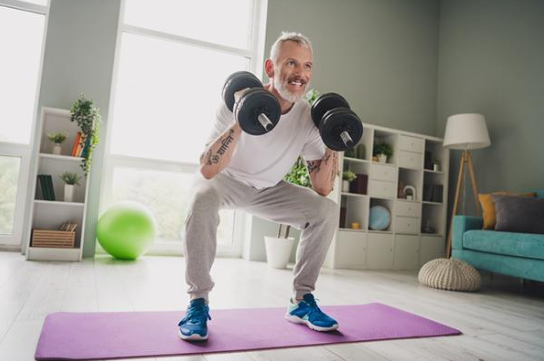
A home workout can be an effective way to build strength, improve fitness, and stay active without spending hours at a gym. If you want practical fitness tips and workout guides, MTech Content offers resources covering fitness, health, and related topics. Adding dumbbells to your home routine can give you more resistance, exercise variety, and opportunities to improve your strength.
The key is not simply lifting heavier weights. A better home workout combines appropriate exercise selection, proper form, controlled movement, progressive overload, and sufficient recovery. With the right approach, even a small home workout space can support a well-rounded fitness routine.
Why Add Dumbbells to Your Home Workout?
Dumbbells are one of the most versatile pieces of home workout equipment. A single pair can be used for dozens of exercises and can support both beginner and advanced training routines.
Unlike some fixed gym machines, dumbbells allow you to perform exercises from different positions and angles. They can also help you train each side of the body independently, which can be useful when developing balanced strength.
A dumbbell workout can target nearly every major muscle group, including:
- Chest
- Back
- Shoulders
- Biceps
- Triceps
- Legs
- Glutes
- Core
This versatility makes dumbbells particularly useful for people who want an effective home workout without purchasing large machines or building an expensive home gym.
See also: Best Foot Massager in Pakistan 2026 | Highlife
Choose the Right Dumbbell Weight
One of the first things to consider is the amount of resistance you use.
Beginners often make the mistake of choosing dumbbells that are too heavy. While heavier weights can eventually help you progress, excessive resistance can make it difficult to maintain proper exercise form.
Choose a weight that allows you to complete your repetitions with controlled movement. The final repetitions should feel challenging, but you should still be able to maintain good technique.
As your strength improves, gradually increase the resistance instead of making large jumps in weight.
Focus on Proper Exercise Form
Dumbbell training can also work well alongside cardiovascular exercise. Adding enjoyable activities such as dancing, cycling, jump rope, or other forms of fun cardio workouts can make your weekly fitness routine more varied and engaging.
Adding resistance makes proper exercise technique even more important.
Before increasing your dumbbell weight, make sure you understand the movement and can perform it correctly.
During each exercise, pay attention to your posture, balance, range of motion, breathing, and movement speed.
For example, during a dumbbell row, avoid using excessive momentum to move the weight. During a dumbbell squat, maintain a stable position and control the movement instead of rushing through each repetition.
Good form can help you get more from each exercise while reducing unnecessary strain.
Build Your Routine Around Major Movement Patterns
A balanced dumbbell workout should include different types of movements instead of focusing on only one muscle group.
Squatting Exercises
Dumbbell squats are a simple way to add resistance to a basic lower-body movement.
Hold the dumbbells at your sides or in a comfortable position near your shoulders. Maintain a stable stance and lower your body under control.
Squatting exercises primarily work the legs and glutes while also requiring core stability.
Hip-Hinge Exercises
Dumbbell Romanian deadlifts are useful for training the posterior chain, including the hamstrings and glutes.
Keep the dumbbells close to your body as you move through your hips. Focus on maintaining control instead of turning the exercise into a squat.
Pushing Exercises
Dumbbell chest presses and shoulder presses are useful upper-body pushing exercises.
A dumbbell chest press primarily works the chest while also involving the shoulders and triceps. A shoulder press places greater emphasis on the shoulders and triceps.
Pulling Exercises
Dumbbell rows provide an effective pulling movement for a home workout.
They primarily target the back while also involving the arms. Keep your torso stable and avoid swinging the weight.
Try a Full-Body Dumbbell Workout
A full-body dumbbell workout can be particularly useful if you have limited time during the week.
Rather than spending an entire session training one small muscle group, you can combine exercises that work different areas of your body.
A simple beginner workout could include:
- Dumbbell squats
- Dumbbell chest presses
- One-arm dumbbell rows
- Dumbbell Romanian deadlifts
- Dumbbell shoulder presses
- Dumbbell bicep curls
- Dumbbell tricep extensions
You do not need to perform every exercise in every session. Choose movements based on your experience, goals, available equipment, and overall workout plan.
Use Progressive Overload
Your body gradually adapts to repeated exercise. If the same workout becomes easier over time, you can increase the challenge through progressive overload.
Progressive overload does not always mean immediately using heavier dumbbells.
You can progress by:
- Increasing dumbbell weight
- Adding repetitions
- Adding a set
- Improving exercise technique
- Increasing the range of motion when appropriate
- Using a more difficult exercise variation
- Increasing training volume gradually
For example, if you can comfortably complete a particular exercise with good technique, you may eventually increase the dumbbell weight and work with a slightly lower number of repetitions.
Small improvements over time can help you continue progressing without making your workouts unnecessarily difficult.
Make Your Home Workout More Time-Efficient
A home workout does not need to take an hour or more.
Before starting, organize your equipment and decide which exercises you will perform. Keeping your dumbbells and other equipment nearby can reduce unnecessary interruptions.
You can also combine compatible exercises into paired movements.
For example, perform a set of dumbbell chest presses followed by dumbbell rows. Rest after completing both movements and then repeat the pair.
This can help you make better use of your available workout time.
However, avoid turning strength training into a race. Proper technique should remain more important than completing the workout as quickly as possible.
Combine Dumbbell Training With Cardio
Dumbbell training can strengthen the resistance-training side of your fitness routine, while cardio can add cardiovascular activity.
You can combine dumbbell workouts with activities such as:
- Walking
- Cycling
- Dancing
- Jump rope
- Jogging
- Step exercises
- Recreational sports
The type of cardio you choose can depend on your preferences, fitness level, available space, and goals.
Enjoyable cardio activities can also make it easier to stay consistent. MTech Content’s guide to fun cardio highlights activities such as dancing, sports, jump rope, hiking, cycling, and home cardio circuits as alternatives to repetitive traditional cardio.
Use Dumbbells for Circuit Training
Circuit training can add variety to a home dumbbell workout.
For example, you could create a circuit using:
- Dumbbell squats
- Dumbbell rows
- Dumbbell shoulder presses
- Dumbbell lunges
- Dumbbell curls
Move between exercises with controlled technique and take rest whenever necessary.
Circuit training can make a workout feel more dynamic, but beginners should not sacrifice exercise form simply to move quickly between exercises.
Start with manageable weights and focus on learning each movement.
Include Core-Stability Exercises
Your core works during many dumbbell exercises even when you are not performing traditional abdominal movements.
Dumbbell rows require torso stability, while squats and lunges require control through the trunk.
You can also include suitable weighted core exercises depending on your experience.
The goal is not to perform endless abdominal exercises. Instead, create a routine that develops overall strength, stability, and control.
Add Variety Without Constantly Changing Your Routine
Doing exactly the same workout indefinitely can become repetitive. However, changing your entire routine every week can make it difficult to track progress.
A better approach is to make small and purposeful changes.
For example, you could replace standard dumbbell squats with split squats or change a two-arm dumbbell row into a one-arm variation.
You can also occasionally change your workout structure while keeping your main movement patterns consistent.
This gives your routine variety without making progress difficult to measure.
Give Your Body Enough Time to Recover
Recovery is an important part of any resistance-training program.
Your muscles need time to recover after challenging workouts. Sleep, nutrition, hydration, rest days, and overall activity can all influence how you feel during your next session.
If you consistently feel exhausted or your performance starts declining, look at your training volume and recovery habits.
More exercise is not always better. A sustainable workout routine should allow you to train consistently without constantly feeling exhausted.
Create a Simple Weekly Dumbbell Schedule
Having a basic weekly plan can make it easier to remain consistent.
For example:
| Day | Activity |
| Monday | Full-body dumbbell workout |
| Tuesday | Light cardio or active recovery |
| Wednesday | Full-body dumbbell workout |
| Thursday | Rest or light activity |
| Friday | Full-body dumbbell workout |
| Saturday | Cardio or recreational activity |
| Sunday | Rest |
This is only an example. Your schedule should reflect your experience, goals, available time, and ability to recover.
Beginners may prefer fewer resistance-training sessions, while experienced individuals may use a more structured training split.
Track Your Dumbbell Workout Progress
Tracking your workouts can help you understand whether your training is improving.
Record important details such as:
- Exercise
- Dumbbell weight
- Sets
- Repetitions
- Workout date
- Exercise difficulty
Over several weeks, these records can reveal progress that may not be obvious from one workout to the next.
For example, you might discover that you can perform more repetitions with the same weight or use heavier dumbbells while maintaining proper form.
These small improvements can help you decide when to increase the challenge.
Avoid Common Dumbbell Workout Mistakes
Adding dumbbells does not automatically make a home workout more effective.
Avoid using excessive weight, rushing repetitions, ignoring proper form, skipping warm-ups, and training the same muscles without enough recovery.
You should also avoid copying advanced workouts without having the strength and technique required to perform them safely.
Start with exercises that match your current ability. As your fitness improves, gradually increase the difficulty.
Make Your Home Workout Sustainable
The best workout routine is one that you can maintain consistently.
You do not need expensive equipment, complicated training programs, or extremely long workouts to start improving your fitness.
A suitable pair of dumbbells, enough space to move safely, and a realistic training schedule can provide a strong foundation.
Choose exercises you enjoy, set achievable goals, and make gradual improvements.
Adding different forms of cardio can also prevent your routine from becoming repetitive. Activities such as dancing, cycling, jump rope, and recreational sports can add variety while keeping you active.
Frequently Asked Questions
Is dumbbell training good for home workouts?
Yes. Dumbbells are versatile and can be used for exercises that target most major muscle groups. They are especially useful when you want to add resistance without purchasing large gym machines.
Can I build muscle with dumbbells at home?
Dumbbell resistance training can support muscle development when you use appropriate resistance, train consistently, gradually increase the challenge, and allow sufficient recovery.
How heavy should my dumbbells be?
The appropriate weight depends on your strength, exercise selection, experience, and goals. Choose a weight that allows you to maintain proper form while making the final repetitions challenging.
How many dumbbell exercises should I do in a home workout?
There is no universal number. Beginners can start with several exercises covering major movement patterns and add more exercises as their experience develops.
Can dumbbell workouts help with weight management?
Dumbbell training can contribute to an active lifestyle and help build or maintain muscle. For weight management, resistance training works best as part of a broader approach that includes appropriate nutrition and regular physical activity.
Can I combine dumbbell training with cardio?
Yes. Combining resistance training with cardio can create a more varied fitness routine. You can use activities such as walking, cycling, dancing, jump rope, or recreational sports according to your preferences and fitness level.
How often should I do dumbbell workouts?
The appropriate frequency depends on your goals, experience, workout intensity, and recovery. Beginners should focus on consistency and allow adequate recovery between challenging sessions.
What is progressive overload in dumbbell training?
Progressive overload means gradually increasing the training challenge as your body adapts. You can increase resistance, repetitions, sets, exercise difficulty, or movement quality.
Are dumbbells enough for a full-body workout?
Dumbbells can provide exercises for the chest, back, shoulders, arms, legs, glutes, and core. With appropriate exercise selection, they can form the foundation of a full-body home workout.
Should beginners use heavy dumbbells?
Beginners should prioritize manageable resistance and proper technique rather than choosing the heaviest available dumbbells. As strength and control improve, resistance can be increased gradually.
Final Thoughts
Improving your home workout with dumbbell training does not require a complicated program.
Start with appropriate weights, learn proper exercise technique, train different muscle groups, and use progressive overload to make gradual improvements. Adding enjoyable cardio can provide additional variety and make your overall fitness routine more engaging.
Most importantly, create a workout plan that fits your lifestyle and current fitness level. A simple dumbbell workout performed consistently can be more useful than an advanced routine that you cannot maintain.
With the right approach, dumbbells can turn a basic home workout into a structured, versatile, and progressive fitness routine.
