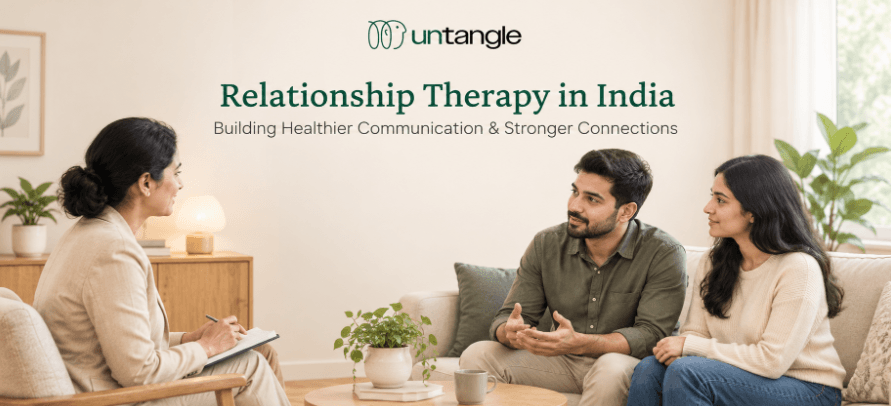
Relationships can be deeply rewarding, but even strong partnerships can go through periods of tension, misunderstanding, or emotional distance. Differences in communication styles, expectations, finances, family responsibilities, work pressures, and personal priorities can sometimes create challenges between partners.
When repeated conversations do not seem to resolve an issue, professional support may provide a structured space to look at what is happening. Relationship therapy is one approach that can help partners understand recurring patterns, communicate more clearly, and explore practical ways of moving forward.
For couples in India, relationship concerns may also involve cultural expectations, family involvement, marriage traditions, or differences in personal and professional goals. Understanding these influences can be an important part of the therapeutic process.
What Is Relationship Therapy?
Relationship therapy is a form of counselling that focuses on the dynamics between people in a relationship. Although it is commonly associated with couples, the broader principles can apply to different types of close relationships.
A therapist may help partners examine how they communicate, respond to disagreements, express needs, and interpret each other’s behaviour.
The goal is not necessarily to decide who is right or wrong. Instead, sessions can provide an opportunity for both people to be heard and to understand the relationship from different perspectives.
Depending on the situation, relationship counselling may address communication difficulties, recurring arguments, emotional disconnection, trust concerns, changing expectations, or significant life transitions.
When Might Couples Consider Therapy?
There is no single point at which a couple “should” seek counselling. Some people reach out when a particular problem has become difficult to manage, while others use therapy as a way to work on communication and relationship skills.
Frequent or Unresolved Arguments
Arguments are a normal part of many relationships. However, repeatedly having the same disagreement without reaching an understanding can become frustrating.
Relationship therapy can help partners identify the pattern behind recurring conflicts and consider alternative ways of responding.
Communication Difficulties
Sometimes the issue is not simply what partners say but how they communicate. One person may withdraw during difficult conversations, while the other may continue pushing for an immediate response.
Learning to listen actively, express concerns clearly, and slow down emotionally charged conversations can make communication more constructive.
Emotional Distance
Partners can live together, share responsibilities, and still feel disconnected. Busy schedules, parenting, career demands, or prolonged stress may gradually reduce meaningful interaction.
Therapy can provide dedicated time to explore what may be contributing to that distance.
Major Life Changes
Marriage, parenthood, relocation, career changes, financial pressures, or caring for family members can alter relationship dynamics.
Professional support may help partners discuss changing responsibilities and expectations before disagreements become entrenched.
How Does Relationship Therapy Work?
The exact structure varies according to the therapist, concerns involved, and needs of the people attending.
An initial session may involve discussing the relationship’s history, current concerns, and what each person hopes to achieve from counselling.
The therapist may then help identify communication patterns or recurring situations. For example, one partner might become quiet when conflict begins, which could cause the other partner to feel ignored and become more persistent. That increased pressure could lead to further withdrawal, creating a cycle that neither person intended.
Recognising such patterns can help couples move their attention away from blame and towards understanding the interaction itself.
Developing Healthier Communication
Communication skills are often an important part of relationship counselling. These may include:
- Listening without immediately preparing a response
- Expressing feelings and needs directly
- Asking questions instead of making assumptions
- Taking a pause when discussions become overwhelming
- Reflecting back what the other person has said
- Discussing one issue at a time
- Avoiding personal attacks during disagreements
These skills can be useful beyond therapy sessions and may become part of everyday communication.
Relationship Therapy and Indian Couples
Relationships in India can exist within a complex social and family environment. For some couples, decisions about marriage, living arrangements, finances, parenting, or careers may involve parents and extended family.
Cultural expectations can also influence ideas about gender roles, responsibilities, privacy, and communication.
This does not mean every Indian couple experiences the same challenges. Each relationship has its own circumstances. However, culturally sensitive counselling can give partners space to discuss how family traditions and personal values affect their relationship.
For couples in different cities or with demanding schedules, online counselling may also be an option, depending on the therapist’s services and the couple’s preferences.
See also: Health and Wellness Revolution: The Ultimate Guide to Holistic Living
Practical Ways to Strengthen a Relationship
Therapy is not the only way to work on relationship habits. Partners can also make small changes in everyday interactions.
Make Time for Meaningful Conversations
Regular conversations do not have to focus only on schedules, household tasks, or responsibilities. Setting aside uninterrupted time to talk about experiences, concerns, and future plans can help maintain connection.
Listen to Understand
Listening does not always mean agreeing. Try to understand what your partner is communicating before immediately explaining your own position.
A simple response such as, “I can see why that was difficult for you,” can acknowledge someone’s experience without necessarily agreeing with every detail.
Address Problems Rather Than Personalities
There is a significant difference between saying, “We need a better way to divide household responsibilities,” and “You never help.”
Focusing on a specific behaviour or situation makes a difficult conversation more actionable.
Notice Positive Interactions
Relationships can become overly focused on problems when partners are already experiencing tension. Paying attention to everyday acts of kindness, appreciation, humour, and support can help create space for positive interaction.
What Are the Potential Benefits?
The experience of relationship therapy differs from couple to couple, and there is no guaranteed outcome. However, counselling can provide a structured environment for partners to work on areas such as:
- Communication and active listening
- Conflict-management skills
- Understanding relationship patterns
- Expressing needs and boundaries
- Exploring differences in expectations
- Rebuilding constructive dialogue
- Navigating significant life changes
The value may come not only from finding solutions but also from gaining a clearer understanding of how each person experiences the relationship.
Choosing a Relationship Therapist
Finding an appropriate therapist is an important decision. Couples may want to consider the professional’s qualifications, experience, therapeutic approach, availability, and whether they offer online or in-person sessions.
It can also be useful to ask how the therapist typically works with couples and whether both partners will have opportunities to express their perspectives.
A comfortable and respectful therapeutic environment matters. If either partner feels unable to speak openly, discussing that concern with the therapist can be an important part of the process.
Frequently Asked Questions
1. Is relationship therapy only for married couples?
No. Relationship counselling can be relevant to dating couples, engaged partners, married couples, and people navigating other close relationships. The focus depends on the concerns being addressed.
2. Should couples wait until their relationship is in serious difficulty?
Not necessarily. Some couples seek professional guidance when they notice communication problems or recurring disagreements, rather than waiting for difficulties to become more complicated.
3. Can relationship therapy be done online?
Many therapists offer online sessions, although availability varies. Online counselling can be convenient for couples who live in different locations or have demanding schedules.
4. What happens during the first session?
The first session commonly involves discussing the relationship, current concerns, relevant background, and what the individuals hope to address. The exact format depends on the therapist.
5. Does relationship therapy guarantee that a couple will stay together?
No. Therapy does not guarantee a particular relationship outcome. It can instead provide a structured setting for communication, reflection, and exploring possible ways forward.
Conclusion
Healthy relationships are not built on the absence of disagreement. They often depend on how partners handle differences, communicate needs, respond to difficult moments, and make room for each other’s perspectives.
Relationship therapy can offer couples a supportive setting to examine communication patterns, understand recurring conflicts, and develop more constructive ways of interacting. For people in India, culturally aware counselling can also provide space to consider family expectations and personal values within the relationship.
If you feel that professional guidance could help you and your partner explore relationship concerns, Untangle offers counselling and psychotherapy support designed around individual needs and circumstances. Reaching out can be a practical first step toward having a clearer, more constructive conversation about your relationship.
