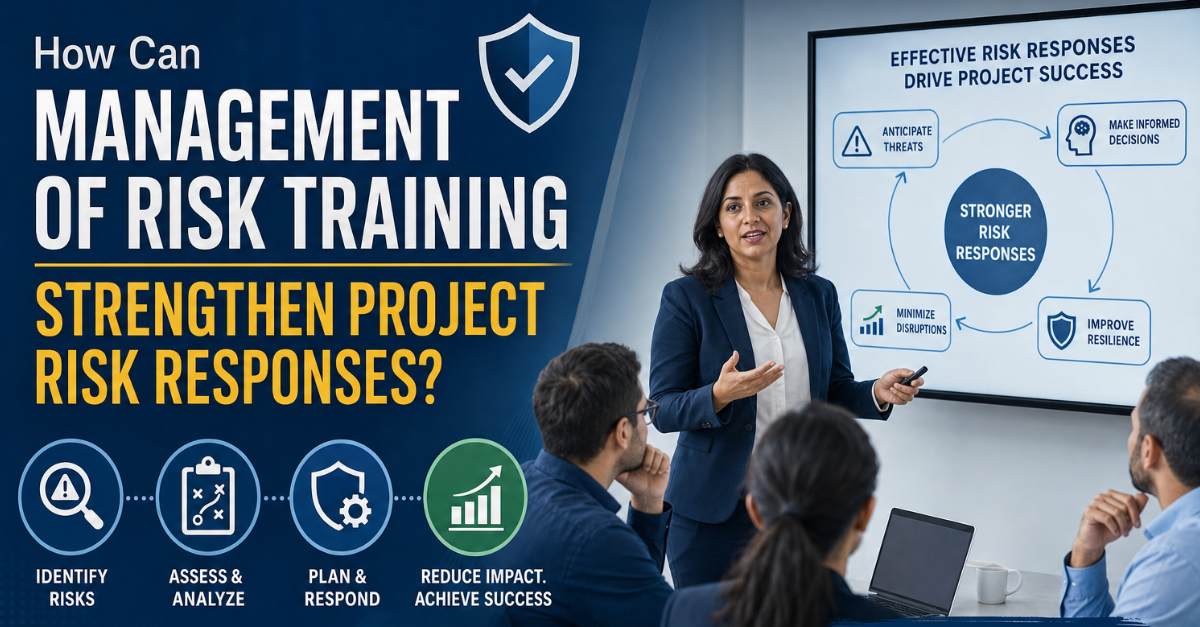
Project risks can affect budgets, schedules, quality, resources, and expected outcomes. Simply recording these risks is not enough. Teams need to identify uncertainty, assess its potential impact, choose suitable responses, assign responsibility, and monitor changes throughout delivery. Management of Risk Training can help professionals develop this structured approach and make better decisions when risks emerge. By combining practical risk techniques with effective project governance, teams can move from simply documenting risks to actively managing uncertainty and improving their ability to respond when project conditions change.
How Can Structured Risk Training Improve Risk Identification and Assessment?
Early risk identification gives project teams more time to understand uncertainty and prepare suitable responses. A structured approach encourages professionals to review internal issues, external factors, dependencies, assumptions, suppliers, and stakeholder concerns before they affect project objectives. PRINCE2 Project Management Training helps professionals develop a practical understanding of how risks can be identified and considered during project planning and delivery.
Better Risk Prioritisation
Not every risk requires the same level of attention. Teams should consider probability, potential impact, timing, and overall exposure when prioritising risks. PRINCE2 Training can help professionals apply a consistent approach to risk assessment, allowing teams to focus resources on risks that could have the greatest effect on cost, time, scope, quality, or benefits.
See also: Buz Business: The Ultimate Guide to Startups, Tech & Hidden Travel in India
Continuous Risk Assessment
Risk assessment should continue throughout the project rather than stopping after the planning stage. Changes in requirements, budgets, suppliers, technology, regulations, or stakeholder expectations can introduce new risks or increase existing exposure. Regular reviews help teams maintain accurate risk information and respond to changing conditions throughout the project lifecycle.
Supporting Better Decisions
Structured risk assessment connects risks with project objectives and supports informed decision-making. A PRINCE2 Project Management Course can help professionals evaluate exposure, available resources, tolerances, and possible outcomes before selecting responses. This creates a clearer basis for managing uncertainty and protecting project objectives.
How Can Structured Risk Training Help Teams Select Better Risk Responses?
Choosing the right response is essential for managing project uncertainty. PRINCE2 Project Management Training helps professionals understand how to assess risks and select suitable actions based on their potential impact. For threats, teams may avoid, reduce, transfer, or accept the risk. For opportunities, they can exploit, enhance, share, or accept them. This structured approach helps teams make practical decisions instead of reacting to risks without a clear plan.
Proportionate Risk Responses
Risk responses should match the level of exposure. A PRINCE2 Training approach encourages teams to consider cost, resources, timing, effectiveness, and project objectives before choosing an action. This prevents teams from overspending on minor risks or underestimating major threats.
Managing Secondary Risks
Risk responses can create new uncertainties. For example, changing a supplier may reduce delivery risks but introduce quality concerns. Teams should therefore review the wider effects of each response and identify possible secondary risks before taking action.
Using Contingency Plans
Some risks cannot be completely prevented. A PRINCE2 Project Management Course can help professionals understand the value of contingency planning. Clear actions, responsibilities, triggers, and escalation points allow teams to respond quickly when risks occur, reducing delays and protecting project objectives.
How Can Risk Training Strengthen Risk Ownership and Accountability?
Every important project risk should have a clearly assigned owner. PRINCE2 Project Management Training helps professionals understand how ownership supports effective monitoring, response planning, and escalation. A responsible owner should have the knowledge, authority, and information needed to manage the risk. Clear ownership also makes it easier to track actions and provide timely updates to stakeholders.
Better Communication and Coordination
Risk management involves project managers, team members, suppliers, specialists, and senior stakeholders. PRINCE2 Training helps professionals understand how responsibilities and risk information should flow across a project. When roles are clearly defined, everyone knows who monitors risks, who completes response actions, and who receives important updates.
Faster Risk Response
Clear accountability reduces delays when risks begin to develop. Without defined responsibilities, team members may assume someone else is handling the issue. Assigning ownership for risks and response actions encourages faster decisions, regular monitoring, and timely escalation when required.
Regular Ownership Reviews
Risk ownership should be reviewed as projects progress. Changes in teams, suppliers, responsibilities, or project conditions may require ownership to be reassigned. A PRINCE2 Project Management Course can help professionals maintain effective accountability throughout the project lifecycle, ensuring important risks remain visible, monitored, and properly managed.
How Can Risk Training Improve Ongoing Risk Monitoring?
Project risks can change as circumstances, priorities, and information develop. A risk that seemed unlikely during planning may become more serious later. Continuous monitoring helps teams identify these changes early by reviewing probability, impact, triggers, and response actions. PRINCE2 Training encourages professionals to treat risk management as an ongoing process rather than a one-time planning activity. This approach helps project teams stay prepared and make informed decisions throughout the project lifecycle.
Key Areas to Review During Risk Assessments
Effective risk reviews should focus on current project conditions instead of simply repeating previous records. Teams can check whether existing risks remain relevant, whether their probability or impact has changed, and whether planned responses are producing the expected results. Reviews can also highlight emerging risks and opportunities. Updating risk ownership, response plans, and escalation requirements ensures that project decisions are based on accurate and current information.
The Value of Early Risk Escalation
Some risks may exceed the authority or tolerance of the project team. Delaying escalation can reduce the number of available response options and increase potential project impact. Early escalation gives decision-makers more time to consider additional resources, schedule adjustments, alternative approaches, or corrective actions. PRINCE2 Project Management Training can help professionals understand when significant changes in risk exposure require communication through appropriate governance channels. This supports faster decisions while keeping responsibilities clear.
Using Lessons to Improve Future Risk Management
Every project can provide useful lessons about risk management. Teams can review which risks were identified early, which responses worked effectively, and where potential problems were missed. They can also assess whether communication, ownership, assessment, or escalation could have been improved. Recording these lessons helps organisations strengthen their risk practices over time. A PRINCE2 Project Management Course can support this structured approach and help professionals apply consistent risk management practices across different projects.
Developing Practical Risk Management Skills
Professionals who want to strengthen their project and risk management knowledge can explore training opportunities through Tecknologia. Its project management training can help learners develop practical knowledge for workplace situations. By combining risk awareness with planning, governance, decision-making, and project control, professionals can develop a more complete approach to managing projects. This can be valuable for those seeking to improve their project management capabilities while developing stronger risk monitoring practices.
Conclusion
Strong project risk responses require more than maintaining a risk register. Teams need practical skills to identify uncertainty, assess exposure, select suitable responses, assign ownership, communicate important information, and monitor changing conditions. Management of Risk Training can help professionals develop these capabilities and apply them throughout the project lifecycle. Structured risk practices also support better governance because decisions are based on current information rather than assumptions. When teams manage risks proactively, they can respond earlier, use resources effectively, and remain better prepared for unexpected changes while protecting important project objectives.
