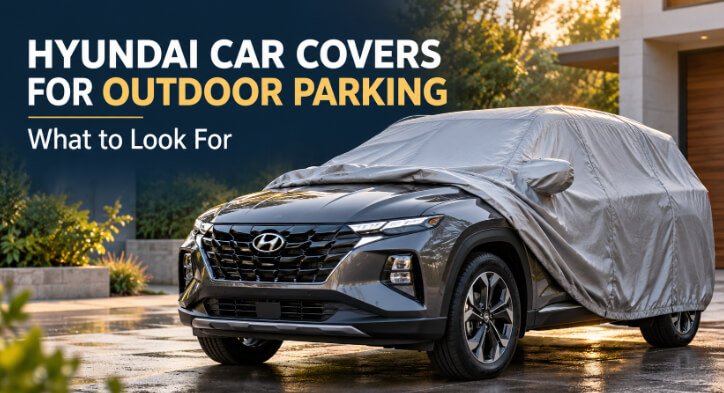
Outdoor parking exposes your Hyundai to whatever the day brings: dusty traffic, afternoon sunshine, unexpected showers, and leaves falling from nearby trees. Even when the car stays in one place, its exterior collects dirt that makes the next wash feel overdue. A suitable cover can reduce that exposure, but choosing one involves more than matching a vehicle name on a product page.
The right choice depends on your exact model, local weather, parking surroundings, and how frequently you drive. Understanding these details helps you choose a cover that is practical to use and appropriate for the conditions outside your home.
Start With Your Parking Environment
Before comparing fabrics or prices, look at where your Hyundai spends most of its parked hours. An open driveway receives different exposure from a shaded apartment parking space. Roadside parking may bring traffic dust, while spaces beneath trees often collect leaves, bird droppings, and sticky debris.
Think about the recurring problem you want to manage. If you wash the car mainly because of settled dust, a manageable cover that you use consistently may be more useful than a bulky option. If rain and strong sunshine dominate your weather, examine the material specifications more closely.
Also consider access. You need enough room to walk around the vehicle, secure the cover, and remove it without dragging it across the ground.
If you share the parking space with other vehicles, allow time to remove and pack the cover before neighbours need access. Notice whether sprinklers reach the car, whether nearby construction creates extra dust, and whether tree branches hang over the roof. These observations give you a clearer buying checklist than a broad promise of all weather protection. Revisit that checklist if your parking location changes during the year or season.
Match the Cover to Your Hyundai Model
A cover should follow the proportions of your car without stretching tightly over its corners or leaving large areas of loose fabric. Hyundai hatchbacks, sedans, and SUVs have different rooflines, heights, and rear profiles, so a general size label alone may not establish compatibility.
Check the model, manufacturing year, and body style listed by the seller. If the listing covers several generations, ask whether dimensions or fitting photographs are available. Changes in bumpers, mirrors, or roof accessories can affect how neatly a cover sits.
When browsing Hyundai Car Covers, compare the available fit information with your vehicle rather than relying entirely on the main product photograph. Confirm whether the design accommodates extended mirrors, folded mirrors, antennas, and any accessories you have fitted.
Understand Rain Protection and Breathability
Descriptions such as waterproof and water resistant should prompt questions about construction. Read what the seller actually specifies about the fabric, seams, and intended outdoor use. A fabric description alone does not explain how the complete cover performs around stitched areas.
Breathability deserves attention alongside rain protection. Breathable outdoor fabrics are designed to allow moisture and heat to escape, while water resistance helps shed rainfall. Manufacturer guidance distinguishes these properties because blocking rain and managing moisture beneath a cover are separate concerns.
For your purchase, ask how the material handles prolonged wet weather and whether the manufacturer recommends periodic removal. After rainfall, inspect the cover and the vehicle instead of assuming everything underneath remains dry. Avoid storing a damp cover in its bag.
Look Beyond a Shiny Outer Surface
A silver finish may look suitable for summer parking, but appearance does not establish ultraviolet resistance or durability. Look for an explicit material specification and an explanation of the cover’s intended exposure. Colour is only one part of the decision.
Consider how much direct sunlight reaches your parking space and how long the car remains there. A cover used occasionally during weekends has different demands from one left outside every working day.
Check whether the product information describes resistance to sunlight and provides realistic care instructions. Avoid expecting a cover to make a parked cabin comfortable immediately or eliminate every effect of summer heat. Before driving, remove it completely and ventilate the car as needed.
Examine the Inner Surface and Stitching
The side touching your Hyundai matters as much as the weather facing layer. Inspect photographs or request details about the inner surface, especially around seams and reinforced sections. Rough edges, exposed fasteners, or poorly finished joins deserve closer examination.
Check how mirror pockets connect to the main body and whether attachment points appear adequately reinforced. These areas experience handling each time you install or remove the cover. Neat stitching and clear construction details are more informative than impressive sounding layer counts.
Keep cleanliness part of the decision, too. Even a soft lining cannot make trapped grit harmless. Remove loose contamination through appropriate washing before covering, and keep the cover’s inner surface away from dusty paving, soil, and garage floors.
Check How the Cover Stays Secure
An outdoor cover needs a fastening arrangement suitable for its intended conditions. Elastic hems can help position the edges, while supplied straps or attachment systems may offer additional restraint. Read the installation instructions to understand how these features should work together.
Wind can lift loose fabric or pull a cover out of position. Manufacturer guidance recommends securing covers appropriately in windy locations and warns that wind entering underneath can loosen or damage them.
Examine where buckles and straps sit once installed. They should be positioned according to the instructions, with hard components kept from rubbing against painted surfaces. If your parking area experiences severe gusts, follow the manufacturer’s limitations and inspect the fastening arrangement regularly.
Choose Features You Will Actually Use
Convenience often determines whether a cover becomes part of your routine. A heavy design may be inconvenient if you uncover the car twice daily. A lighter option may be easier to fold, but its suitability still depends on material quality and outdoor specifications.
Front and rear markings help you position the cover without repeated adjustments. A useful storage bag should accommodate the folded material without forcing you to compress it while damp or dirty.
Door access zippers can be convenient, provided their placement suits your vehicle and protective construction prevents hard parts contacting paint. Consider whether you really need this feature. Simple installation, manageable weight, and straightforward storage are often more valuable than numerous accessories.
Make Cleaning and Storage Part of Ownership
Before ordering, check how the cover must be cleaned. Some materials have specific requirements for detergent, water temperature, washing equipment, and drying. Follow the instructions supplied with the particular product instead of treating every outdoor cover alike.
Inspect it periodically for accumulated dirt, damaged stitching, and worn fastening points. Clean contamination before it becomes difficult to remove, using the recommended method. Let the cover dry as instructed before folding it for storage.
During removal, lift and fold the material carefully so the outside does not repeatedly contact the inner lining. Choose a clean storage location and avoid leaving the bag on wet ground. These small habits make the cover easier to handle and help keep its contact surface clean.
See also:
Compare Value With Clear Questions
A useful comparison starts with confirmed compatibility, material information, fastening details, and care requirements. Price becomes easier to assess once you understand those essentials. A cheaper cover that is awkward to fit may offer poor practical value.
Read the return policy before purchasing, particularly if compatibility is uncertain. Check what the warranty covers and whether there are conditions relating to outdoor exposure or incorrect installation. Customer photographs can help assess fit, although they cannot prove long term performance.
Choose the option that suits your actual parking conditions and daily habits. Well chosen Hyundai Car Covers work best alongside regular washing, sensible installation, and periodic inspection. Consistent care makes outdoor protection a practical routine rather than another item sitting unused in storage.
