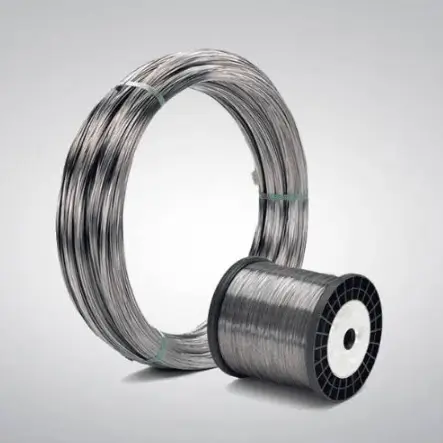
Wire materials are used in a wide range of manufacturing processes, from producing small precision components to fabricating specialised industrial products. When a project requires high strength relative to weight, corrosion resistance, or compatibility with demanding environments, titanium alloy wire may be worth evaluating. Its performance depends on the alloy grade, wire diameter, manufacturing condition, surface quality, and the intended application.
A successful purchasing decision begins with understanding how these factors influence fabrication and the finished component.
What Is Grade 5 Titanium?
Grade 5 titanium, commonly referred to as Ti-6Al-4V, is an alpha-beta titanium alloy containing aluminium and vanadium. It is known for its combination of strength and relatively low density, making it useful in engineering applications where weight and mechanical performance must be balanced.
The alloy is not identical to commercially pure titanium. Its higher strength can be advantageous, but it may also require different forming, machining, and joining methods. Engineers should select the material according to the component’s loading conditions and manufacturing requirements rather than assuming that a stronger grade is always preferable.
Material specifications should identify the applicable standard and condition of the wire. These details help ensure that the product selected is appropriate for the intended process.
The Role of Wire Diameter
Wire diameter is one of the most important variables when selecting material for precision work. Small changes in diameter can influence flexibility, tensile behaviour, fit, and the amount of force needed for forming.
Dimensional tolerance
Manufacturers should identify the nominal diameter and allowable tolerance before ordering. A tightly controlled tolerance may be necessary for automated production, precision assemblies, or components that must fit within restricted spaces.
Length and supply format
Depending on the manufacturing process, wire may be required in coils, straight lengths, or other specified formats. The preferred format should match feeding equipment, cutting systems, storage arrangements, and production volumes.
Surface condition
Surface defects, scratches, and contamination may affect downstream forming, coating, joining, or inspection. Buyers should define surface requirements and packaging expectations when the wire will be used in a sensitive process.
Mechanical Characteristics and Formability
Grade 5 alloy wire can offer high strength, but forming behaviour depends on diameter, material condition, processing history, and the geometry of the intended component.
Bending or drawing operations may create local stresses, especially where the design includes tight radii or repeated deformation. Before moving into full production, manufacturers may benefit from testing representative samples under the actual forming conditions.
Engineers should also distinguish between static strength and fatigue performance. A wire that withstands a single tensile load may behave differently when exposed to repeated bending, vibration, or cyclic stress. Surface quality, component geometry, and residual stresses can influence the result.
Corrosion Resistance and Service Conditions
Titanium alloys develop a protective oxide layer that supports corrosion resistance in many environments. This characteristic can be valuable in specialised industrial and marine-related applications, although suitability depends on the exact conditions.
Temperature, chemical concentration, fluid movement, crevice geometry, and contact with other metals can influence corrosion behaviour. A design should therefore be evaluated against its actual operating environment.
Where wire is incorporated into an assembly containing dissimilar metals, engineers should consider potential galvanic effects. Appropriate design, isolation, and material compatibility measures may be required depending on the conditions.
Processing and Quality Control
Wire manufacturing and conversion processes require consistent material handling. The selected methods should preserve the required diameter, surface condition, and mechanical characteristics.
Cutting and straightening
Cutting methods should minimise burrs and distortion. If straight lengths are needed, straightening should be controlled so the process does not create unacceptable surface damage or deformation.
Joining
Welding or other joining methods must be appropriate for titanium and the alloy specification. Titanium can react with atmospheric gases at elevated temperatures, so welding often requires effective shielding and qualified procedures.
Storage and handling
Clean storage helps protect the wire from contamination and mechanical damage. Coils should be handled carefully to prevent kinks, tangling, and local deformation. Protective packaging can be particularly important during long-distance transport.
See also: Architectural Concepts in Fashion
Inspection and traceability
Depending on the application, quality checks may include diameter measurements, surface inspection, tensile testing, chemical composition verification, and review of material certificates. Buyers should agree on the required checks before procurement.
Industrial Uses
Grade 5 titanium wire may be considered for specialised engineering components, precision assemblies, fastening applications, and other uses where its properties meet the design requirements. It should not be assumed suitable for every type of wire-based product, since flexibility, fatigue life, and formability requirements can vary substantially.
The designer should establish whether the material needs to carry load, maintain a specific shape, withstand corrosive exposure, or undergo repeated movement. Those requirements guide the selection of diameter, condition, and manufacturing method.
Selecting a Reliable Supply Partner
A detailed request for quotation should include the grade, applicable standard, wire diameter, tolerance, length or coil format, surface requirements, quantity, packaging, and delivery schedule.
For applications requiring traceability, buyers should also confirm the availability of material certificates, batch identification, and relevant test results. It is sensible to review a sample or technical data before committing to a large production order when the wire will be used in a new process.
Product details for titanium valleys Gr5 Titanium Wire can be reviewed as part of supplier evaluation. The actual dimensions, supply format, material condition, and documentation should be confirmed directly before ordering.
Frequently Asked Questions
1. What is Grade 5 titanium wire made from?
Grade 5 titanium is commonly known as Ti-6Al-4V, an alloy containing titanium, aluminium, and vanadium. Buyers should verify the supplied composition and standard through appropriate material documentation.
2. Can titanium wire be bent or formed?
Forming may be possible, but the result depends on diameter, material condition, bend radius, and the number of deformation cycles. Representative testing can help validate the process.
3. What details should be included in a wire order?
Specify the grade, standard, diameter, tolerance, supply format, surface condition, quantity, packaging, certification requirements, and delivery schedule.
Conclusion
Grade 5 titanium wire can support precision manufacturing when strength, weight, and environmental compatibility are important. Its successful use depends on selecting the correct dimensions, controlling surface quality, validating forming or joining methods, and confirming material traceability. Clear technical specifications and suitable quality checks help manufacturers reduce uncertainty and achieve more consistent production results.
