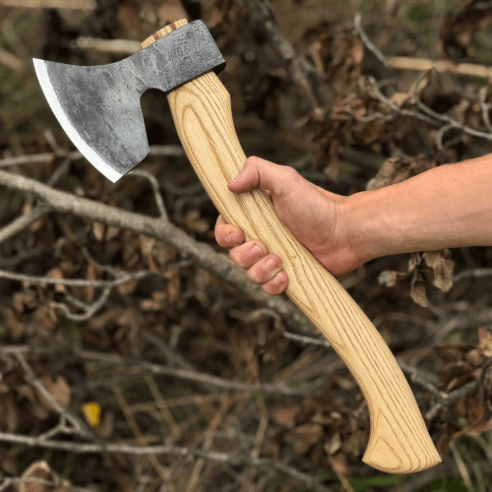
A traditional hand forged wood axe combines practical performance with the craftsmanship of traditional toolmaking. Unlike ordinary mass-produced tools, a forged axe is shaped with attention to the head profile, cutting edge, balance, and handle. These features can make the right axe a dependable choice for chopping firewood, clearing branches, camping, bushcraft, and general outdoor work.
If you are comparing different designs, explore the best hand forged axes for wood chopping to find handmade options designed for different outdoor applications. JW SteelCrafts offers axe designs in several styles, including camping, bushcraft, bearded, Viking, and other traditional-inspired designs.
What Is a Traditional Hand Forged Wood Axe?
A traditional hand forged wood axe is produced by shaping heated steel into an axe-head profile through forging. After the head is formed, it can be ground, heat-treated, sharpened, finished, and fitted with a wooden handle.
The finished tool combines traditional craftsmanship with the practical requirements of modern wood processing. However, forging alone does not determine quality. Steel selection, heat treatment, edge geometry, handle fitting, and overall balance are equally important.
Traditional Forging Process
During forging, heated steel is shaped into the desired axe-head profile. The maker can pay close attention to the dimensions, proportions, eye, poll, blade profile, and overall geometry.
The forging process can produce a distinctive handmade character, but buyers should look beyond appearance when evaluating an axe. Proper heat treatment and accurate finishing are essential for creating a reliable working tool.
Strong Steel Head
The axe head must withstand repeated impact against wood. Properly selected and heat-treated steel can provide a useful combination of hardness, toughness, and edge retention.
High-carbon and Damascus steel are commonly used in handmade axe designs. The specific performance of any axe depends on the steel composition and manufacturing process rather than simply the label used to describe it.
Balanced Construction
Balance affects how naturally an axe moves during a swing. An excessively heavy head can increase fatigue, while an axe that is too light may not provide enough momentum for the intended task.
The best choice is usually an axe that you can comfortably control while still providing sufficient cutting power for the type of wood you process.
Why Choose a Hand Forged Axe for Chopping Wood?
A hand forged axe can be an appealing choice for people who want a traditional tool for outdoor wood-processing tasks while also appreciating handcrafted construction.
Firewood Preparation
A suitable chopping axe can be used for cutting branches and processing smaller and medium-sized pieces of firewood.
For large rounds that need to be separated along the grain, however, a dedicated splitting axe may be more appropriate. The wider wedge profile of a splitting axe is designed to push wood apart rather than simply cut through fibers.
Camping and Outdoor Work
Depending on its size and design, a forged axe can be useful for camping, bushcraft, homesteading, trail maintenance, and general outdoor work.
A smaller axe or hatchet is easier to transport and maneuver, while a larger axe can provide greater reach and momentum for heavier work.
Traditional Craftsmanship
For many buyers, the appeal of a hand forged axe goes beyond basic functionality. The forged construction, natural wooden handle, blade profile, and individual finishing can give the tool a distinctive traditional character.
Handmade variation can also make each axe slightly different in appearance, which is particularly attractive to collectors and enthusiasts of traditional tools.
Important Features of a Traditional Wood Axe
Several specifications should be considered before choosing an axe for chopping wood.
Axe Head Weight
Head weight directly influences momentum and handling. A heavier head can deliver greater impact but generally requires more physical effort and control.
Choose a head weight according to your strength, experience, body size, and the type of wood you regularly process.
For light outdoor work, a compact hatchet may be sufficient. For larger firewood and demanding work, a full-sized axe may be more suitable.
Cutting Edge Geometry
The cutting edge should match the intended task.
A chopping axe generally uses an edge profile designed to cut efficiently into wood fibers. A splitting axe typically has a broader wedge-shaped profile designed to separate wood along the grain.
This distinction matters because using the wrong axe can make a task unnecessarily difficult.
Handle Length
Handle length affects leverage, control, reach, and portability.
Longer handles can provide more leverage and are generally suited to larger chopping tasks. Shorter handles offer greater maneuverability and are easier to carry during camping or bushcraft trips.
Your height, experience, work area, and intended use should all influence the handle length you choose.
See also: Why Local Business Directories Matter More Than Ever
Hand Forged Axe vs. Mass-Produced Axe
Both hand forged and factory-produced axes can be effective tools. The biggest differences are usually related to manufacturing methods, consistency, craftsmanship, and design.
Craftsmanship
A hand forged axe is shaped through a forging process and then finished according to its intended design.
This approach can allow attention to details such as the head profile, edge geometry, handle fitting, and overall appearance.
Consistency
Mass-produced axes are manufactured using standardized processes designed to create consistency across large production runs.
Hand forged tools can have subtle variations in finish and appearance. For many buyers, those differences are part of the appeal of owning a handcrafted tool.
Performance Factors
It is important not to judge an axe solely by whether it is forged.
A quality axe also needs appropriate steel, proper heat treatment, suitable edge geometry, secure handle fitting, and good balance. These factors work together to determine how the tool performs.
Choosing Between an Axe and a Tomahawk
Although axes and tomahawks share some characteristics, they are generally designed around different priorities.
Traditional Axes
A conventional wood axe is generally the better choice when your primary purpose is chopping branches, preparing firewood, or processing larger pieces of wood.
Many traditional axes have longer handles and larger heads, providing useful leverage and cutting power for wood-processing tasks.
Tomahawks
Tomahawks are typically more compact and can be useful for camping, lighter outdoor tasks, recreation, and specialized applications.
If portability is more important than maximum chopping power, a tomahawk can be another option for users who prefer a compact traditional design.
How to Choose the Right Axe for Wood
The ideal axe depends on the type of wood, the size of the material, and the work you expect to perform.
For Small Branches
A compact axe or hatchet is usually easier to carry and control when working with small branches and light wood.
Its shorter handle can also make it convenient for situations where a full-sized axe would be unnecessarily large.
For Medium Firewood
A medium-sized chopping axe can provide a useful balance between cutting power and maneuverability when processing branches and smaller logs.
For regular camping and firewood preparation, choose a design that you can comfortably swing without excessive fatigue.
For Large Wood Rounds
Large rounds may require a splitting axe rather than a traditional chopping axe.
A splitting axe’s broader wedge profile helps force wood apart along the grain. Trying to perform every wood-processing task with one general-purpose axe is not always the most efficient approach.
What Makes a Hand Forged Axe a Good Choice?
The best hand forged axe is not necessarily the largest or most expensive model. It is the one whose specifications match the work you need to perform.
Steel and Heat Treatment
Look for an axe made from suitable steel that has received appropriate heat treatment. The goal is to achieve an edge that remains useful during repeated work without making the blade unnecessarily brittle.
Head and Handle Fit
A secure connection between the axe head and handle is essential. Inspect the eye, handle, wedges, and overall fit before using the tool.
A beautifully finished axe is still unsuitable for work if the head is loose or the handle is damaged.
Weight and Balance
The axe should feel controllable when held and swung correctly. A balanced design can help reduce unnecessary fatigue during repeated chopping.
For occasional camping, portability may be more important. For regular firewood processing, greater head weight and handle length may be beneficial.
A Traditional Example: Bearded Damascus Axe
For users interested in traditional axe designs with distinctive craftsmanship, a bearded axe can be an especially interesting option.
For buyers looking for a distinctive traditional design, the best hand forged axe for outdoor use is the Skeggøx Bearded Damascus Axe from JW SteelCrafts. It features a bearded axe profile, Damascus steel head, hardwood handle, and leather sheath, giving it a distinctive appearance for outdoor enthusiasts and traditional-tool collectors.
Rather than choosing an axe simply because it looks traditional, consider whether its dimensions, construction, and intended use fit your needs.
How to Maintain a Hand Forged Wood Axe
Proper maintenance can extend the useful life of a forged axe and help preserve its cutting performance.
Keep the Edge Sharp
Inspect the cutting edge regularly and sharpen it when necessary.
A properly maintained edge can make chopping more efficient and reduce the amount of force required. Use a suitable file or sharpening stone and maintain the existing edge geometry rather than aggressively removing steel.
Protect the Axe Head
Moisture can cause corrosion, particularly on carbon-steel tools.
Wipe the axe head dry after use and store it in a dry location. A light protective coating can help reduce the risk of rust during longer periods of storage.
Inspect the Handle
Check the handle regularly for cracks, splitting, looseness, or excessive wear.
The head should remain securely attached to the handle. If either component becomes significantly damaged, stop using the axe until it has been properly repaired or replaced.
Hand Forged Axe Safety Tips
An axe is a serious cutting tool and should always be handled responsibly.
Keep Your Work Area Clear
Make sure the chopping area is free from people, obstacles, loose branches, and other hazards.
A clear work area gives you sufficient space to maintain control during each swing.
Use Controlled Movements
Avoid relying on excessive force. Controlled movements, appropriate positioning, and a suitable axe can make wood processing more efficient.
Do not swing an axe when you are fatigued or unable to maintain proper control.
Inspect Before Use
Check the axe head, cutting edge, handle, and head-to-handle connection before each session.
Never use an axe with a loose head, severely damaged handle, or other structural problem.
How to Store a Traditional Hand Forged Axe
Storage is just as important as sharpening and cleaning.
Keep the Blade Covered
When the axe is not being used, keep the cutting edge protected with an appropriate sheath or mask. This helps protect the edge and reduces the chance of accidental contact.
Store It in a Dry Place
Avoid leaving a steel axe exposed to rain, damp ground, or high humidity for extended periods.
Dry the head after outdoor use and store the tool somewhere clean and dry.
Protect the Wooden Handle
Natural wood handles can benefit from periodic conditioning. Avoid storing the axe where excessive heat or moisture can cause the handle to dry, swell, or crack.
Traditional Hand Forged Wood Axe Buying Checklist
Before purchasing a traditional hand forged wood axe, consider these factors:
- Intended use: chopping, camping, bushcraft, firewood, or collection
- Head weight: choose a weight you can comfortably control
- Handle length: consider leverage, reach, and portability
- Steel: check the steel type and heat-treatment information
- Edge geometry: make sure it suits chopping or splitting
- Handle material: look for a properly fitted, durable wooden handle
- Balance: the axe should feel controllable rather than awkward
- Sheath or mask: useful for safe storage and transportation
- Maintenance: consider how easily the edge and handle can be maintained
- Overall construction: inspect the head, eye, handle, and finish
Frequently Asked Questions
Is a hand forged axe good for chopping wood?
Yes, a properly designed and heat-treated hand forged axe can be suitable for chopping wood. However, the best performance depends on the axe’s head geometry, weight, edge, handle length, and the type of wood being processed.
Is a hand forged axe better than a regular axe?
Not automatically. Forging is only one part of axe construction. Steel quality, heat treatment, edge geometry, handle fitting, balance, and intended use are also important when comparing axes.
What size axe is best for firewood?
There is no single ideal size for everyone. A medium-sized axe can be versatile for smaller and medium firewood, while larger rounds may be easier to process with a dedicated splitting axe.
What is the difference between a chopping axe and a splitting axe?
A chopping axe is designed primarily to cut across wood fibers, while a splitting axe typically has a wider wedge-shaped head designed to separate wood along the grain.
Are traditional axes suitable for camping?
Yes. A suitably sized traditional axe can be useful for camping tasks such as processing firewood and clearing small branches. Smaller axes and hatchets are generally easier to carry.
How often should a hand forged axe be sharpened?
Sharpening frequency depends on how often the axe is used and what material it cuts. Inspect the edge regularly and sharpen it whenever it becomes noticeably dull or difficult to use efficiently.
Final Thoughts
A traditional hand forged wood axe can be an excellent choice for people who appreciate traditional craftsmanship while needing a practical tool for outdoor wood processing.
When choosing one, consider the steel quality, heat treatment, head weight, edge geometry, handle length, balance, and intended use. A full-sized axe may be better for heavier chopping and firewood work, while a compact axe or tomahawk can be more convenient for camping and lighter outdoor tasks.
The most important factor is matching the tool to the job. With appropriate selection, sharpening, storage, and maintenance, a well-made hand forged axe can become a dependable part of an outdoor tool collection.
Explore the best hand forged axes from JW SteelCrafts to compare traditional-inspired designs and choose an axe that matches your preferred style and intended outdoor use.
